
The gist: Learn what energy hangovers are, how to spot the signs, recover from them, and prevent future crashes—especially for low-energy or neurodivergent folks.
You know what sucks?
I don't drink, but I still feel hungover pretty frequently.
I didn't even realize that could happen until it started happening to me when my chronic illness and burnout got really bad.
Of course, it's not literally a hangover, but it felt so similar, I didn't know what else to call it, especially when I was in the middle of one with bad brain fog.
So many of the same symptoms were there...irritability, fatigue, headaches, nausea, etc.
What's more, even though these "hangovers" weren't from alcohol, they felt conceptually similar:
They would happen from going too hard and doing too much in a short(ish) amount of time, and I would then pay for it while my body recuperated from doing too much damage.
But while alcohol hangovers happened from drinking too hard or too much in a day, these other hangovers happened from doing too much activity—whether that was movement, creative work, or socializing—in a day.
After a while, as shorthand to describe how I was feeling, I started calling the situation an energy hangover, and I think realizing and accepting their existence is the first step in successful energy management.
So today, we’re going to break down everything you need to know about them: what they are, how to recognize them, how to deal with them, and ways you can prevent them happening as often as they do now so you have an easier time working brighter.
What is an energy hangover?
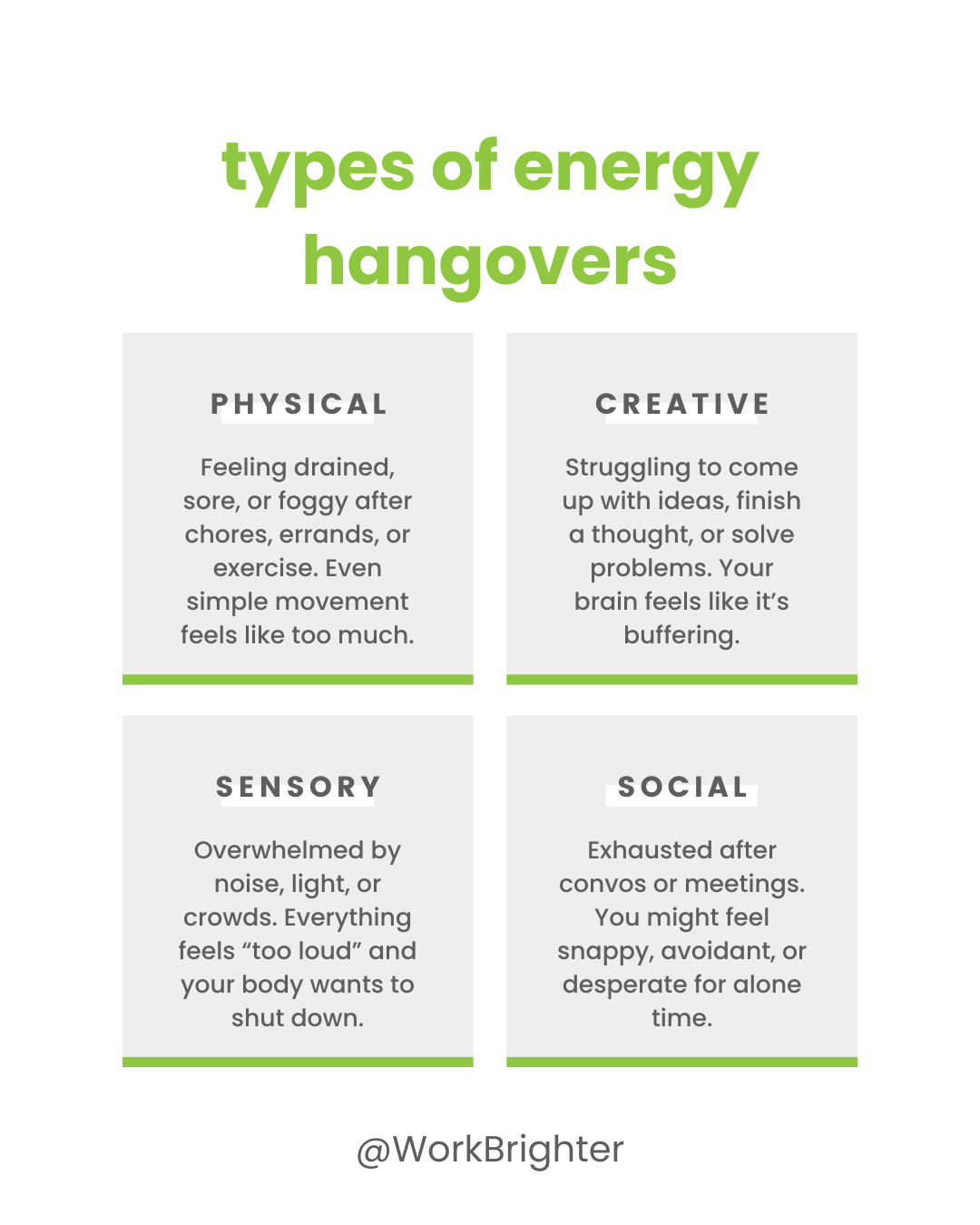
Energy hangovers are when you go too far past your energy limits, either in general or one of the specific types of energy: physical energy, creative energy, social energy, etc.
(That’s something most people don’t realize: going too far past our limit in any one energy type can cause an energy hangover as easily as going past our general combined limit.)
Once you run out of energy, whether that’s total energy or a specific type, it makes it harder or even impossible to function and complete actions that require the energy you don’t have.
So the energy hangover hits.
How it feels will depend on what kind it is. You might not feel physically tired, but your brain is mush. Or your brain might be racing, but your body refuses to move.
That’s why I came up with a few “subtypes” of energy hangovers, based on what kind of energy ran out:
- Went too hard at work? Productivity hangover.
- Too many conversations or meetings? Introvert hangover.
- Too much stimulation? Sensory hangover.
- Overdid it physically? Classic physical energy hangover.
Whatever the cause, the result is basically the same.
Think about it like a bank balance:
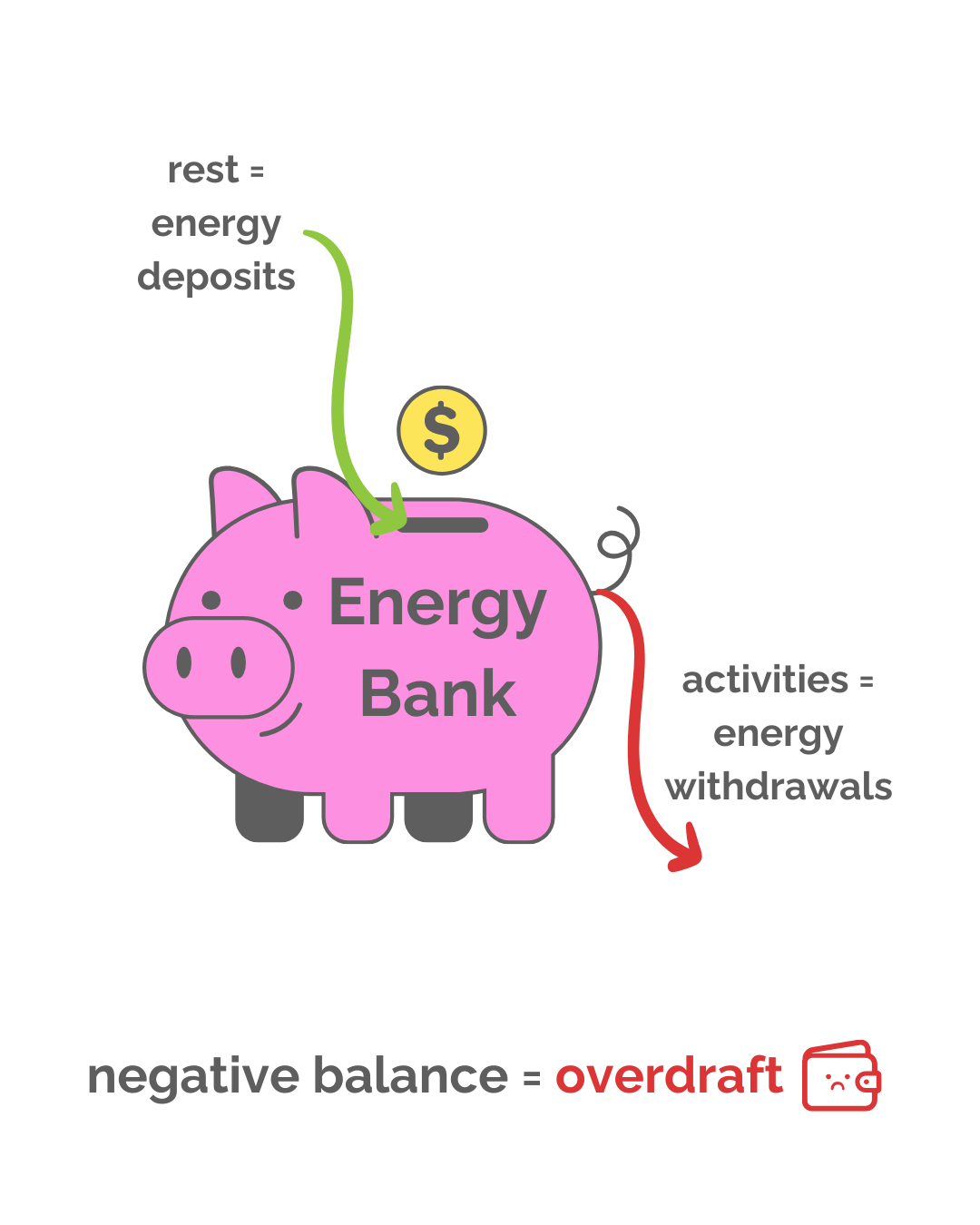
You get “paid” a little bit of energy each day, but if you use more than you have, you overdraft. When that happens, your daily energy deposits go toward paying off that overdraft instead of fueling new activity. You have to wait until you have a positive balance before you can start spending again.
And it’s just as painful as an overdraft in your bank account. 
So to avoid energy hangovers as much as possible, let’s talk about warning signs to look out for.
6 warning signs of energy hangovers
A key part of energy management is building a habit of checking in with yourself throughout the day to see how your energy is feeling. This is how you learn your daily and weekly rhythms, how different activities impact you, and more.
It’s also how you can spot a building energy hangover before it’s inevitable, and take the warning sign to slow down or stop until your energy can recharge a bit.
Here are a few signs I’ve learned to look out for personally:

- You’re getting less done each day, in a way that doesn’t match your usual energy patterns. Like, you were a machine on Monday, barely got through Tuesday, and totally crashed by Wednesday. That kind of slow decline is often a delayed crash from going too hard at the start of the week.
- Tasks that usually feel quick or easy suddenly take way longer. If something that normally takes 10 minutes now takes 30, you might not have enough energy to do it efficiently…even if you think you “should.”
- You’re struggling more than usual to start hard or boring tasks. Everyone procrastinates sometimes, but if your usual tricks to get moving aren’t working, you might just be out of fuel.

- You can’t focus as long as usual before needing a break. You might find yourself zoning out, switching tabs, or refreshing your inbox more often.
- You’re getting crankier the more you do. Whether it’s work, chores, socializing, or life admin, your patience is wearing thinner with every task you try to push through.
- You’re relying more on brute force to get through your to-do list. You’re getting things done, but it feels like dragging a boulder uphill.
If you’re noticing one or two of these things, it could just be a rough day.
But if you’re checking off most of this list, especially after a busy day or week?
It’s probably an energy hangover.
Banish energy hangovers with energy management
Tracking and managing your energy can straight-up change your life, without having to change much at all (no ridiculous productivity hacks needed!)
By better understanding your natural energy, peak hours, and existing habits, you can take advantage of it all to unlock new levels of productivity.
Get started today with my free energy management tracker!
How to recover from an energy hangover
No matter how good you get at managing your energy, energy hangovers will still happen sometimes.
- Maybe you underestimated how much something would take out of you.
- Maybe you intentionally overdid it for an activity that felt worth the consequences.
- Or maybe life just life’d at you, and you didn’t have much of a choice in the matter.
Whatever the reason for the energy hangover, how can you make it suck less?
I’m so glad you asked!
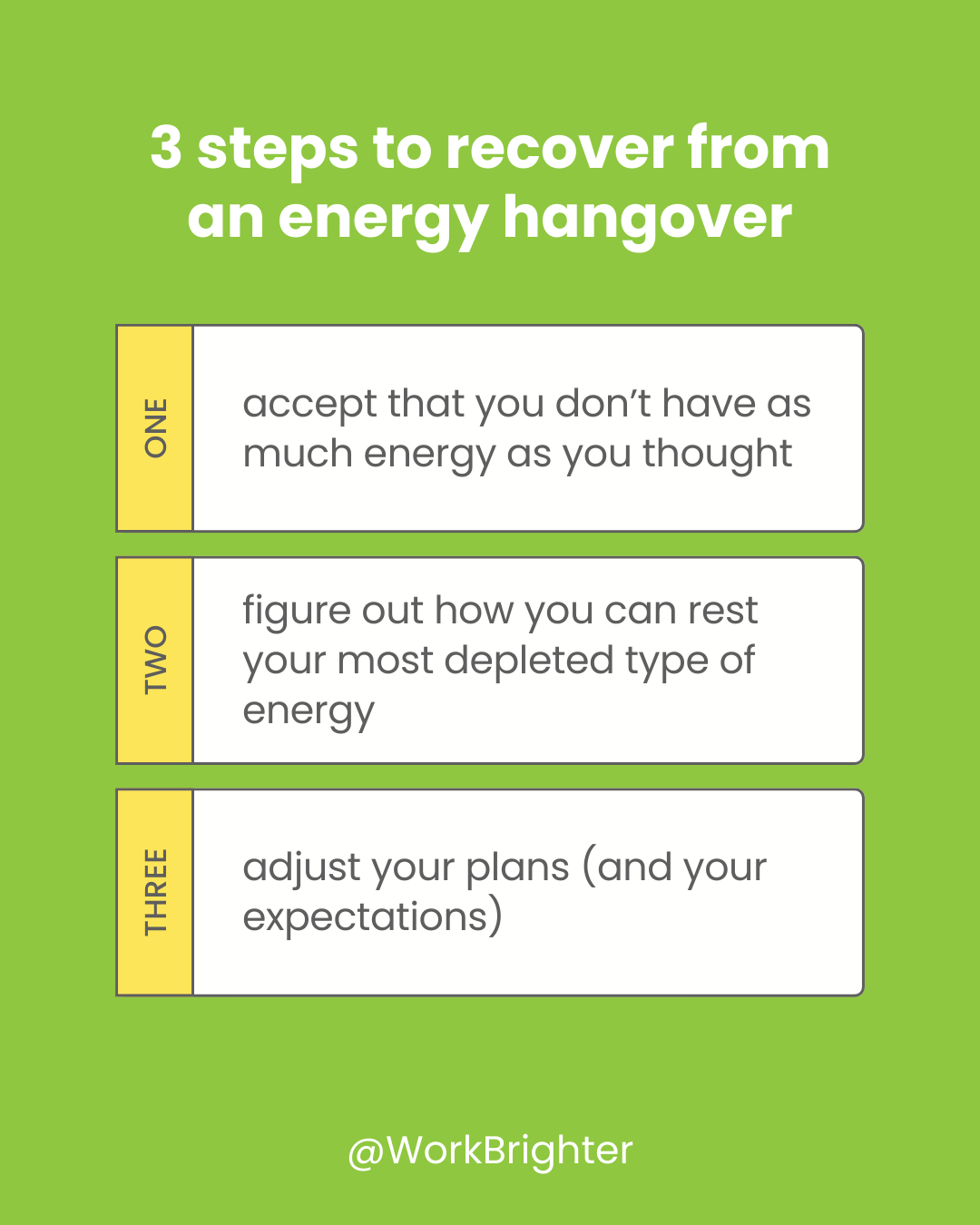
Step 1: accept that you’re in one
This is the annoying part, I know. And one of the harder steps.
It means recognizing and accepting that you and your body have limits, and that they might be lower than you’d prefer…which is something a lot of us don’t like thinking about. 
But the sooner you recognize that your body’s out of whatever fuel it needs, the sooner you can stop trying to push through and start doing what actually helps: resting.
Trying to power through an energy hangover only makes it last longer.
(Not to mention, it makes everything feel harder and more frustrating in the meantime.)
Step 2: rest the most depleted energy type
You might not be able to cancel everything and lie on the couch all day. (Though if you can, I fully support it!)
But even when that’s not an option, you can still adjust how you’re spending your energy to accommodate what you do and don’t have the energy for.
For example:
- If your creative energy is gone, try to avoid anything that needs fresh ideas. You can spend your work time catching up on admin, organization, or other non-creative work instead.
- If your mental energy is what’s zapped, and you still need to get stuff done, see if you can lean on another energy type—like social energy for sending emails or having conversations.
- If your social energy is the one that’s drained, try canceling or rescheduling calls, turning off your camera, or going quiet in your inbox or DMs. The “alone time” can be a great opportunity to get focused creative work done if you have the energy.
You don’t have to stop everything to recover, you just need to stop trying to use energy you don’t have.
This is where it really helps to have a self-care toolkit or energy menu you can pull from. That way, you’re not making decisions from scratch when you’re already wiped—you can just scan what you do have energy for and go from there.
Because unfortunately, the only way out of an energy hangover is through.
But you can make the “through” part a little easier and less miserable.
How to prevent energy hangovers
Carefully managing energy hangovers when they happen is good.
But preventing them from happening in the first place is even better.
It’s not easy, but it’s possible, and here are few ways you can do it:

Tip 1: know your limits
The first step is building awareness around what actually drains you, how much you can handle, and when you tend to crash.
There’s no real formula here, but you can start to notice patterns over time through journaling, energy tracking, or just checking in with yourself regularly.
For example, here are a few limits I’ve figured out for myself:
- No more than 2 hours of writing or deep work per day.
- No more than 1.5 hours of physical activity, including chores.
- No more than 3 “meeting days” per week.
- No more than 3 thoughtful email replies in one day.
Once I figured those out, I started making them part of how I plan my days and weeks. It’s not always perfect, but it helps me avoid going into energy overdraft as often.
Tip 2: use boundaries and systems
Knowing your limits is one thing, but respecting them…actually sticking to them…is another.
Especially when the temptation to “just squeeze in one more thing” is strong.
This is where boundaries come in.
For example, I try not to do any deep work after midnight. (I’m like if a Gremlin was a recovering workaholic.  )
)
But when I’m feeling behind, it’s easy to want to break that rule.
So I’ve set up a few systems to help myself stick to it, like app blockers that turn off work tools during my wind-down hours, and a capture system where I can jot down late-night ideas without opening up work apps.
Same goes for social energy boundaries.
I’ve added meeting limits to my scheduler, blocked off “no call” days in my calendar, and let other people know what my limits are so they can work with them too.
Tip 3: lean into routine
Routines get a bad rap for being boring or rigid, but the right routines make energy management so much easier.
- They reduce the effort required to do recurring tasks.
- They help you avoid stacking high-energy activities too close together.
- And they make it easier to regularly recharge before you crash.
For example, errands and cardio workouts are both physically draining for me. So my weekly routine and planning make sure they never happen on the same day.
That way, I’m spreading out my physical energy use more evenly across the week, and I’m less likely to meet my limit on any given day.
I’ve also built routines around rest and recovery, so I’m not just resting when I’m forced to. I’m doing it regularly enough to keep the fuel tank from hitting zero.
Manage your energy to make hangovers suck less
Energy hangovers are part of life when you have limited energy, whether you’re disabled, chronically ill, or neurodivergent.
But you don’t have to just “put up” with them.
When you understand your patterns, respect your limits, and build habits around how you actually function, you can crash less often and bounce back more easily when you do.
That’s what energy management is really about: working with the energy you have, instead of fighting reality.
Banish energy hangovers with energy management
Tracking and managing your energy can straight-up change your life, without having to change much at all (no ridiculous productivity hacks needed!)
By better understanding your natural energy, peak hours, and existing habits, you can take advantage of it all to unlock new levels of productivity.
Get started today with my free energy management tracker!